Shumanet-100Hydro
Shumanet-100Hydro
Shumanet-100Hydro is a sheeting material with a synthetic fiber base coated with a bitumen-polymer binder. A special soundproofing material with a high degree of impact noise protection is applied to the outer surface of the sheeting. Shumanet-100Hydro effectively solves the complex problem of soundproofing and waterproofing a room. It is used in floating soundproofing flooring systems.
Shumanet-100Hydro (formerly Akuflex Super) is a development by Acoustic Group that solves two problems simultaneously: soundproofing and waterproofing a floating floor. The outer surface is a bitumen waterproofing material with a fiberglass backing, onto which a layer of soundproofing material is glued. The material is available in 10-meter rolls. Sealing the joints between Shumanet-100Hydro strips is achieved using localized heating and requires no additional materials.
Purpose
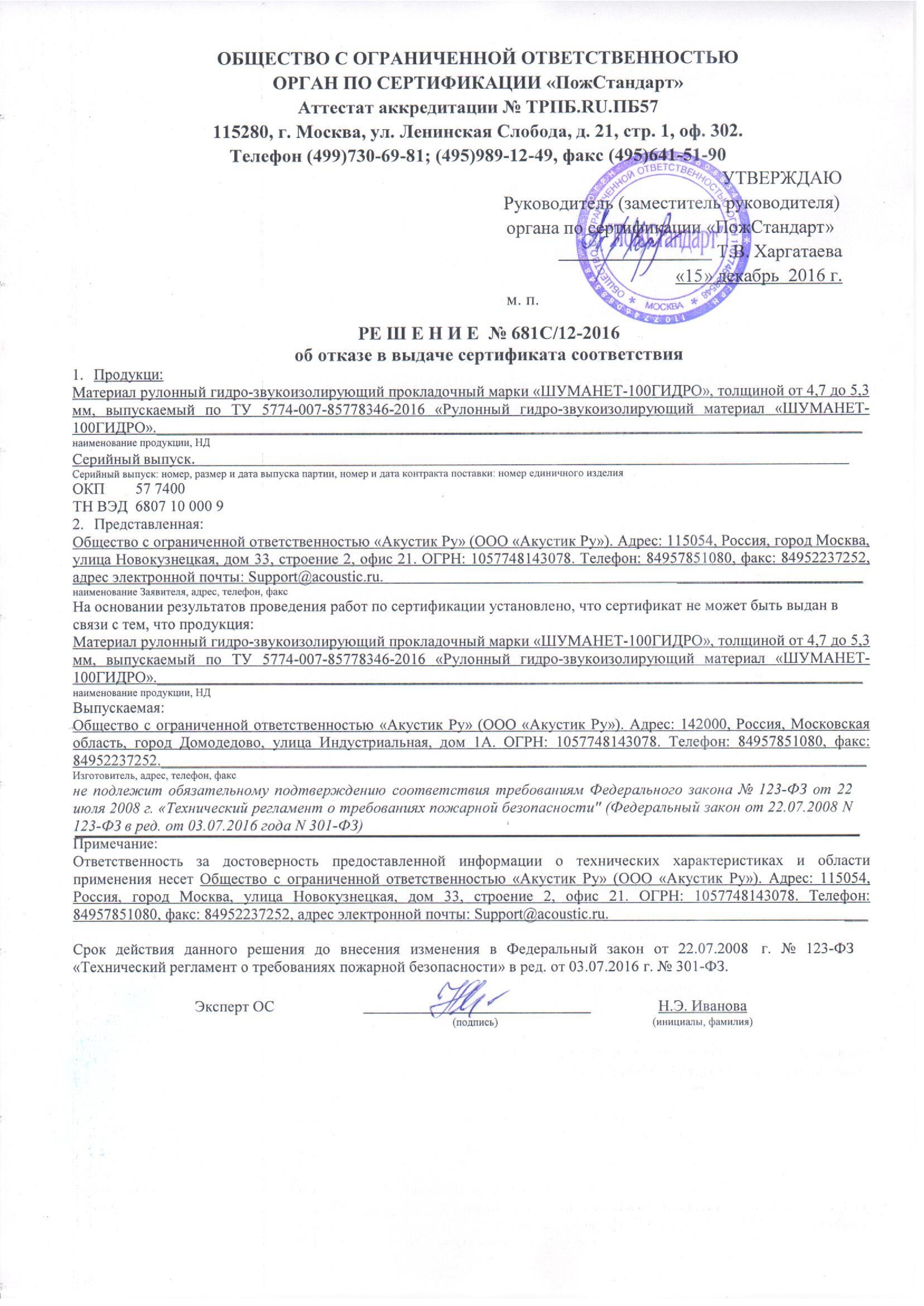
Shumanet-100Hydro is used in floating floor construction to reduce impact noise and provide waterproofing. The material complies with sanitary and building codes.
Production technology
A synthetic fiber base is treated with a bitumen-polymer binder mixture on both sides, with a polyester fiber soundproofing layer bonded to one side. To prevent the layers from sticking together in the roll, a polymer film is applied to the surface of the bitumen layer. To give the material the necessary elasticity, special butadiene styrene-based additives are added to the bitumen mixture.
The higher price of Shumanet-100Hydro compared to the standard Akuflex is justified by the presence of a waterproofing layer.
Peculiarities
- Polyester fiber with reinforced polymer-bitumen membrane;
- Dual-purpose material – hydro and sound insulation;
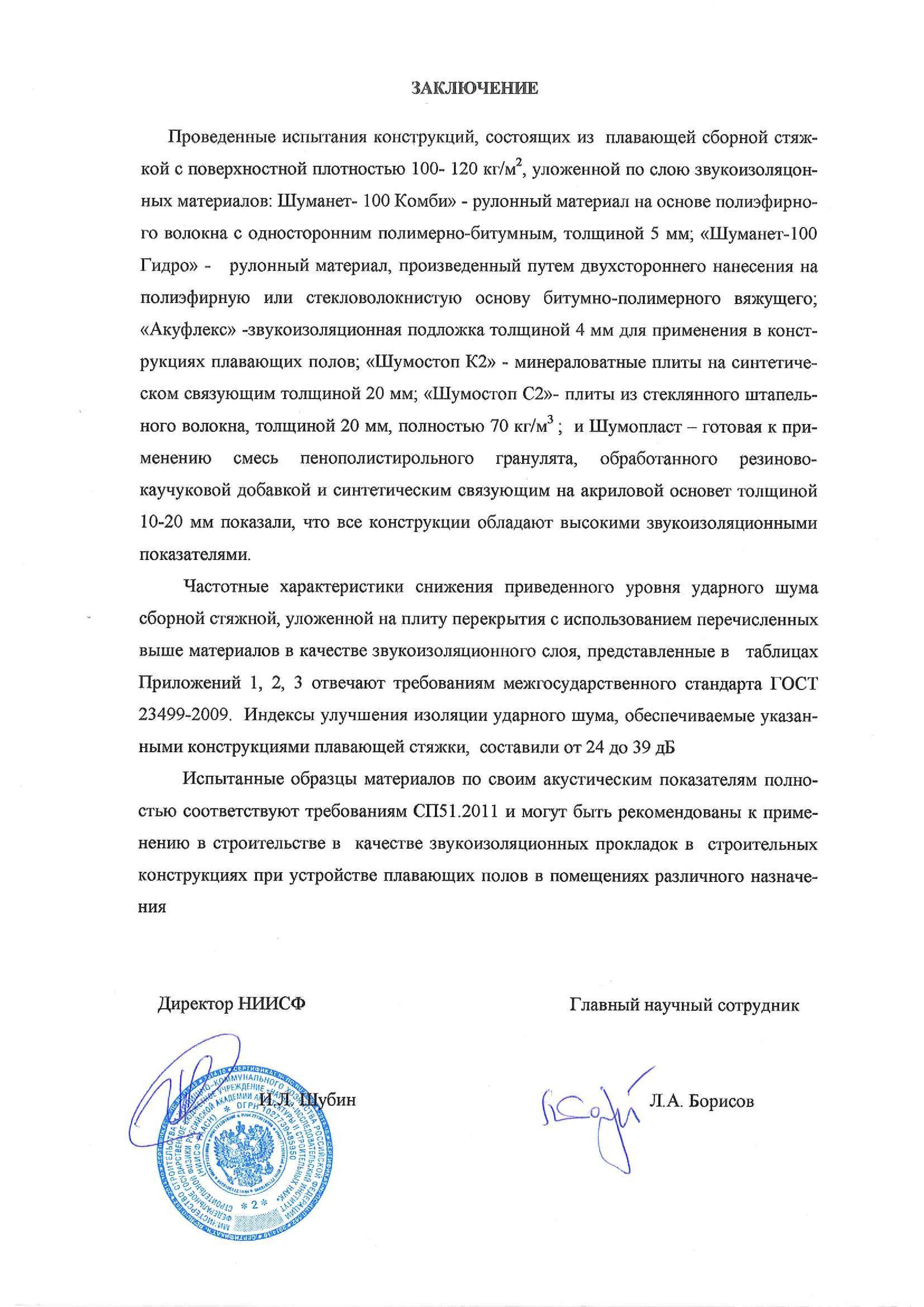
- Impact noise reduction index 24 dB.
Description
Packaging Roll width: 1 m; Working width of the elastic backing excluding the bitumen base overlap – 0.93 m; Roll length: 10 m; Thickness: 5 mm; Roll weight: 34 kg.
Physical and technical characteristics
- Impact noise reduction index, ΔLn,w under a 100 kg/m2 screed – 24 dB
- Dynamic stiffness index under a load of 2 kPa – no more than 80 MN/m3
- Tensile breaking strength – not less than 270N
- Water resistance at a pressure of no more than 0.2 MPa for 2 hours – absolute
- Water absorption within 24 hours – no more than 2%
- Heat resistance – not less than 85 C
Before rolling out the sheets of Shumanet-100Hydro material, it is necessary to carefully sweep the base of the floor from sharp burrs, protruding reinforcement and construction debris to prevent them from getting between the base and the sheets of material.
- Shumanet-100Gidro is rolled out and cut according to the specified dimensions in such a way as to completely cover the floor area and at the same time ensure that the materials are fed onto walls or columns.
- The bitumen surface of the material should face up, and the edges should overlap. To achieve this, each roll has a 93 mm wide overlap of bitumen waterproofing at one end. Additionally, the edges of the material should be folded onto the walls or columns above the level of the screed to avoid rigid contact between the screed and other building structures. If necessary, the material is secured with bitumen self-adhesive tape or the bitumen overlap is secured to the wall using a heat gun to prevent shifting during screed installation. Joints between sheets of material are also sealed by softening the bitumen with a heat gun. After the screed is installed, the edge of Shumanet-100Hydro is left on the wall or column to a height of 100 mm.
- Around doorways, corners, pipe outlets, internal utility lines, and other interior fittings, it’s necessary to provide a wrap (bypass) of Shumanet-100Hydro around these elements. Shumanet-100Hydro is wrapped around the protruding element and secured along the top edge to the element being wrapped with self-adhesive bitumen tape or a heat gun.
- After laying the Shumanet-100Hydro lining material, a 60 mm thick cement-sand screed is made from M-300 grade sand concrete or ready-mixed concrete.
- When installing screeds, reinforce them with metal mesh with a 50 x 50 mm mesh size and a 4 mm rod diameter. The mesh should be positioned within the screed layer no lower than 20 mm from its bottom and no higher than the screed’s centerline. The mesh should be laid with a 100 mm overlap at the joints, tied with binding wire every 200 mm.
- The mortar surface is leveled using a batten. For large floor surfaces, the leveling screed is applied in sections of up to 30 m2 . with mandatory installation of expansion joints.